Education
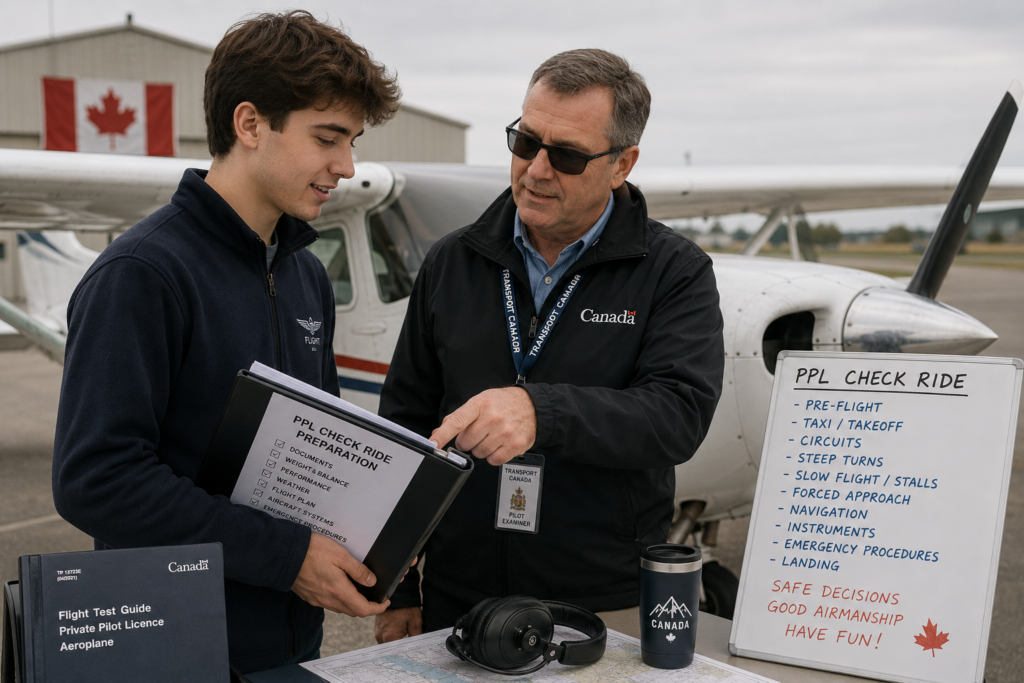
Becoming a Private Pilot is one of the most rewarding achievements in aviation. After completing your flight training, the final step before earning your licence is successfully passing the Transport Canada Private Pilot Licence (PPL) Flight Test. At CheckPilot, our mission is to help students build confidence, improve decision-making skills, and arrive at their flight […]
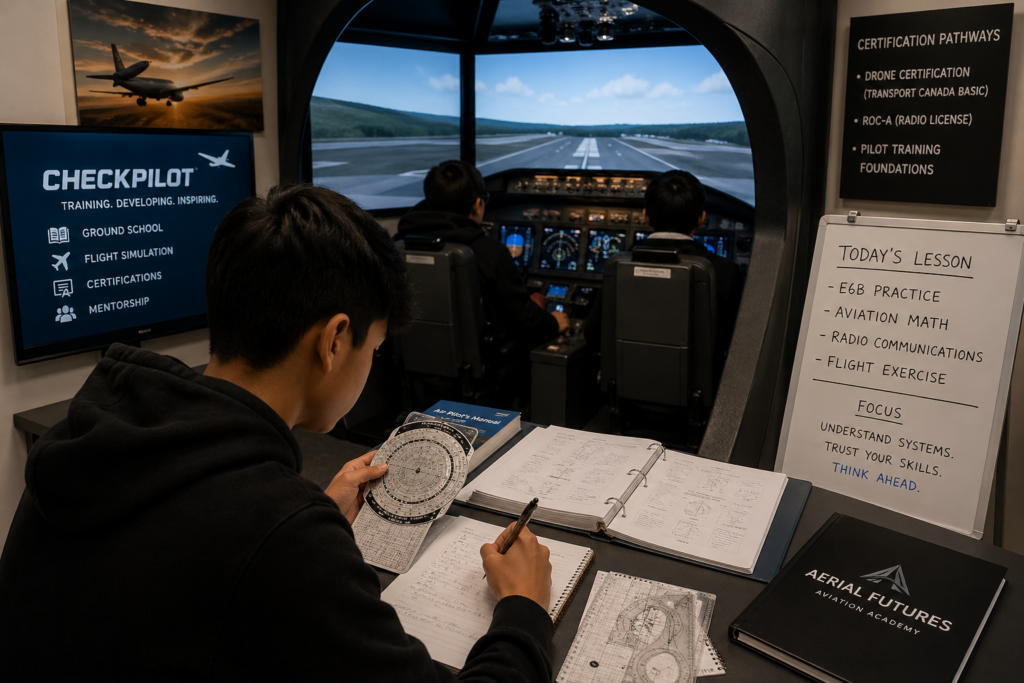
At CheckPilot, we strive to provide educators with the tools they need to effectively monitor, support, and guide students throughout their aviation learning journey. To help instructors become familiar with the platform, we have created a short Instructor Portal Walkthrough Video demonstrating how to access student progress reports through the Gradebook feature. What You’ll Learn […]
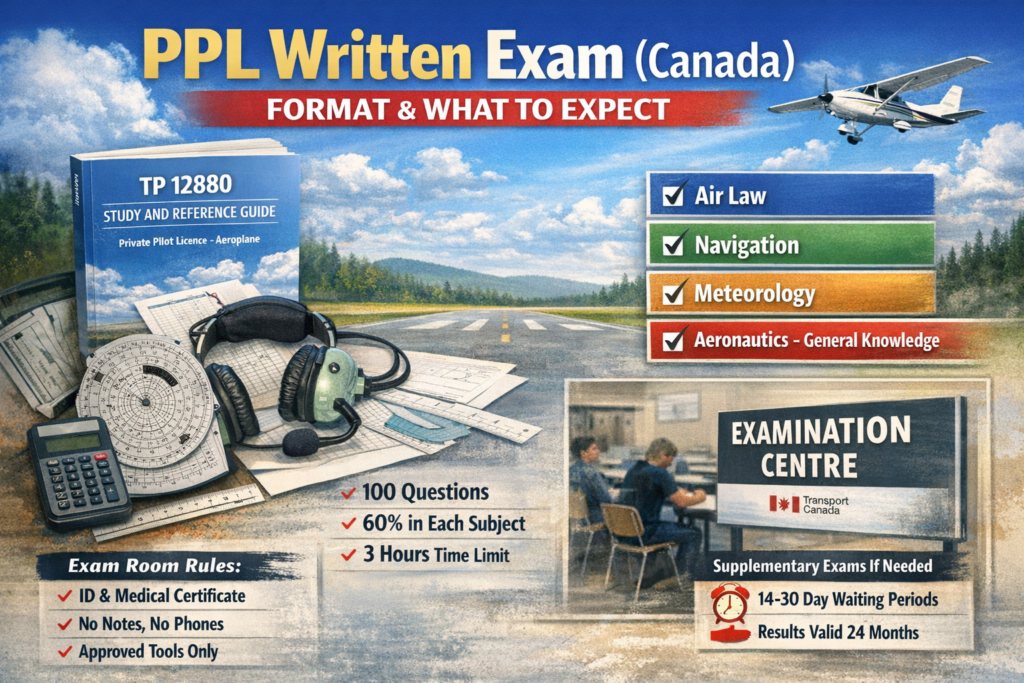
PPL Written Exam Format & What to Expect (Canada) Getting ready for your Private Pilot Licence (PPL) written exam in Canada involves more than just studying meteorology, navigation, air law, and general knowledge. Understanding the exam mechanics — what you’re allowed to bring, how your score is calculated, what happens if you don’t pass a […]

We’re excited to announce the launch of Flying Smart: Safety & Procedures, a brand-new student aviation course designed to briefly introduce future pilots and aviation enthusiasts to the essential tools of safe, confident flying. Aviation has its own language—filled with acronyms, checklists, and procedures that help pilots make smart decisions in the air. This course […]
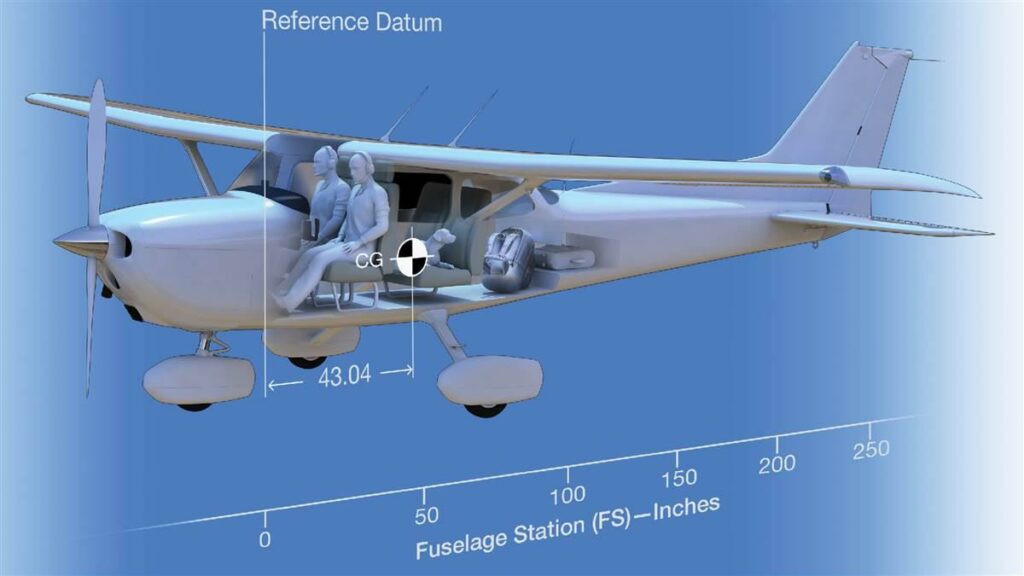
The weight change formula is an essential tool for pilots, allowing for quick recalculation of weight and balance when changes occur in the aircraft’s load. This formula helps avoid complex recalculations and ensures accurate adjustments to the center of gravity (C of G). Components of the Weight Change Formula The formula involves four key components: […]
Understanding Radio Communication for Solo Flying Once you start flying solo, you might encounter new terms and phrases on the radio that you haven’t heard before or that your instructor didn’t cover. I encountered many of these during my cross-country flights after obtaining my Private Pilot License (PPL). I began using the flight following service […]

Types of Drag Affecting an Airplane An airplane experiences two primary types of drag: parasite drag and induced drag. Parasite Drag Parasite drag encompasses three distinct types of drag: form drag, skin friction drag, and interference drag. This drag increases with surface area, air density, and velocity. Form Drag: This type of drag arises from […]
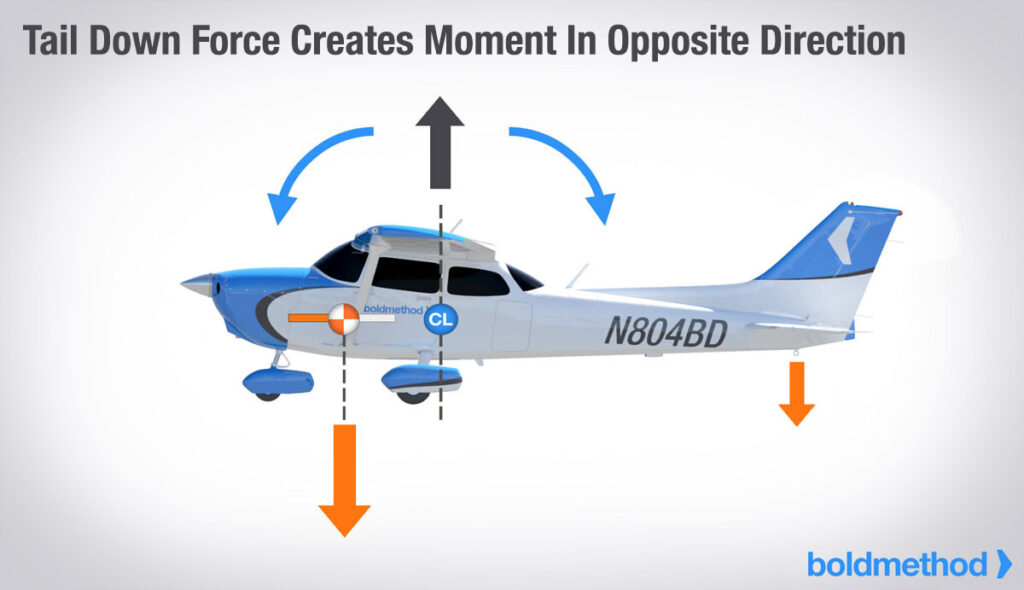
The Key Variables Three key variables influence cruise performance: the center of pressure, the center of gravity, and the downward force generated by the horizontal stabilizer (tail wing). The center of pressure is the point on the wing where lift is generated and is always located behind the center of gravity in conventional aircraft. The […]

Pitot-Static System Errors Blocked Pitot Tube Errors A fully blocked pitot tube will result in an airspeed over-read during a climb and an under-read during a descent. This occurs because the static port becomes the sole source of information, causing the pitot tube to function similarly to an altimeter. With a partially blocked pitot tube, […]